

What Happens in a Couples Therapy Session?
- Chris Gibson
- 12 hours ago
- 4 min read
Coming to couples therapy for the first time can feel awkward.
You might worry that the therapist will take sides, that one of you will be blamed, or that the session will turn into the same argument you keep having at home.
That is not the point of couples therapy.
The first session is about getting a clear picture of what is actually happening in the relationship. Not just the latest argument. Not just who said what. The real issue underneath it.
For many couples, the first step is simple: communication starts again.

Why Couples Usually Come to Therapy
Most couples do not come to therapy because of one bad day.
They come because something has changed, communication has broken down, or the relationship no longer feels the way it used to.
Common reasons include:
Constant arguments
Emotional distance
Infidelity or broken trust
Having children
Unemployment or financial pressure
Menopause, perimenopause or midlife changes
One or both people feeling unsure about the future
These issues can change the whole dynamic of a relationship. Sometimes the couple are arguing about small things on the surface, but underneath there is hurt, resentment, fear, rejection or unmet needs.
That is what the session starts to uncover.
What Happens in the First Session?
In the first session, I usually ask each person what they want from the marriage or relationship.
Then we look at why they think they are not getting those needs met.
That question matters.
A lot of couples arrive focused on what the other person is doing wrong. They may both have valid points, but if the session stays at that level, nothing changes.
The aim is to understand:
What each person wants
What each person feels is missing
What has changed in the relationship
What keeps causing the same problems
Whether both people want to continue
What would need to change if they do
The first session gives both people a chance to speak, but it is also about starting to separate the facts from the emotion, the pattern from the blame, and the real problem from the argument happening on the surface.
Yes, You Can Vent
When couples first sit down with a therapist, they often need to vent.
That is normal.
If someone has felt ignored, hurt or dismissed for a long time, they may have a lot to say. I am happy for people to get that out.
But we are not going to stay in the blame game.
Blame might feel natural, especially when someone feels hurt, but it rarely fixes anything. If both people spend the whole session trying to prove who is right, we do not get to the actual problem.
The work is to move from:
“You always do this.”
to:
“This is what I need, this is what is not working, and this is what has to change.”
That is where therapy becomes useful.
Will the Therapist Take Sides?
No. A couples therapy session is not about picking a winner.
My job is not to decide who is right and who is wrong. My job is to understand what is happening between you and help you both see the pattern more clearly.
That said, accountability matters.
If there has been infidelity, addiction, emotional harm, controlling behaviour or unsafe behaviour, that cannot just be brushed over. Difficult things may need to be said clearly.
But the aim is still not to shame either person. The aim is to deal with the reality of the situation so the couple can decide what happens next.
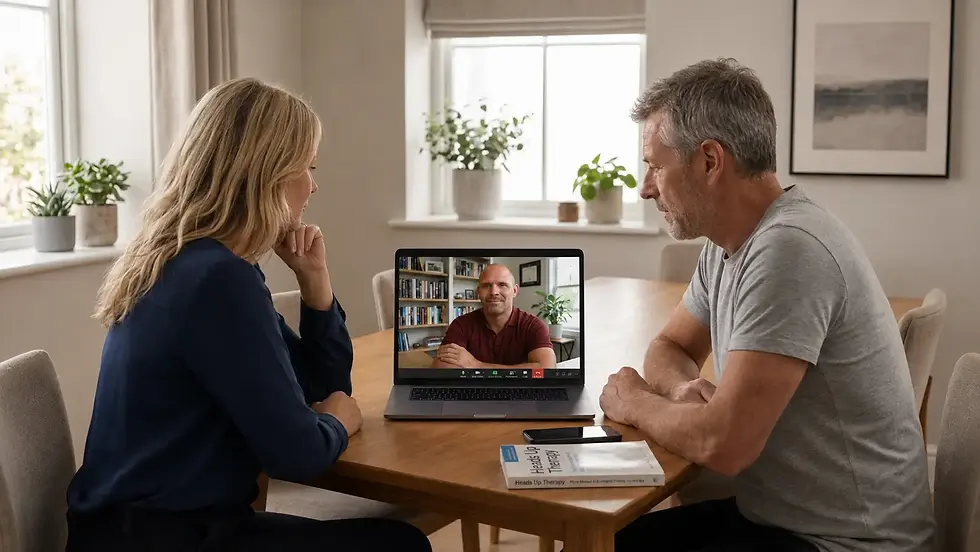
Do You Both Want to Continue?
This is one of the most important parts of the first session. I need to understand where each person is emotionally.
Do you both want the relationship to continue? Is one of you unsure? Is one person already halfway out? Is someone only attending because they feel pressured to be there?
Couples therapy is not about forcing people to stay together. It is about helping both people become honest about where they are, what they want, and what would need to change.
If both people do want to continue, we then look at the context.
Sometimes the relationship cannot just go back to how it was. It needs a new context, clearer boundaries, better communication and a more honest understanding of what each person needs moving forward.
Setting New Goals and Boundaries
If the couple wants to move forward, the next step is setting goals and boundaries.
Goals answer the question:
“What are we trying to build from here?”
Boundaries answer the question:
“What can no longer continue?”
That might mean changing how arguments happen, how trust is rebuilt, how money is discussed, how parenting pressure is handled, or how each person communicates when they feel overwhelmed.
Better communication is not just talking more.
Some couples talk constantly and still resolve nothing. Better communication means learning how to speak, listen and respond in a way that gives the relationship a chance to improve.
What If We Argue in the Session?
Well, you probably already are, so it's very likely. Arguments can happen.
The difference is that in therapy, we can pause and look at what is happening instead of letting the same argument run again.
What triggered that reaction?What did each person hear?What did each person assume?What emotion is underneath the anger?
This helps identify the cycle the couple keeps getting caught in.
Once you can see the pattern, you have a better chance of changing it.
What Should You Expect After the First Session?
You may feel relieved. You may feel tired. You may feel emotional.
That is normal. The first session is not about fixing everything in one hour. It is about getting honest, understanding the relationship more clearly, and starting the right conversation.
You do not need to arrive with perfect words. You do not need to know exactly what happens next. You just need to be willing to look honestly at what is happening, what each person wants, and what needs to change.
Couples therapy gives you somewhere to begin. If you are ready to sort things through, click below and book a FREE minute chemistry check to see if we are the right fit for each other, or you can follow the same link and book your first session.
Comments